Finding reliable Tents For Events in China takes more than comparing product photos. Buyers can explore established tent manufacturers, trade exhibitions, and reputable business-to-business platforms. Each route offers different clues. A factory visit may reveal production capacity, material handling, and quality checks. Online listings are quicker, but their polished images tell only part of the story.
Start with the event itself. A small garden reception, a rainy outdoor fair, and a large exhibition need different structures. Ask suppliers about frame materials, fabric specifications, wind and rain performance, fire-safety documentation, installation support, and replacement parts. Request recent project photos, technical drawings, and written quotations. Then compare what is included, such as flooring, sidewalls, transport, and assembly. Small details matter.
A low price can look appealing. It may not include delivery or setup. Check sample materials where practical, and confirm production timelines before making plans around them. References from previous clients can help, but verify that they describe comparable projects. Communication also matters: clear answers are a useful sign, though not proof of dependable service. I would not treat one impressive showroom or a fast reply as enough. That judgment can be wrong. This guide looks at ways to find potential suppliers in China and assess them with practical questions, so event planners can make a better-informed choice.
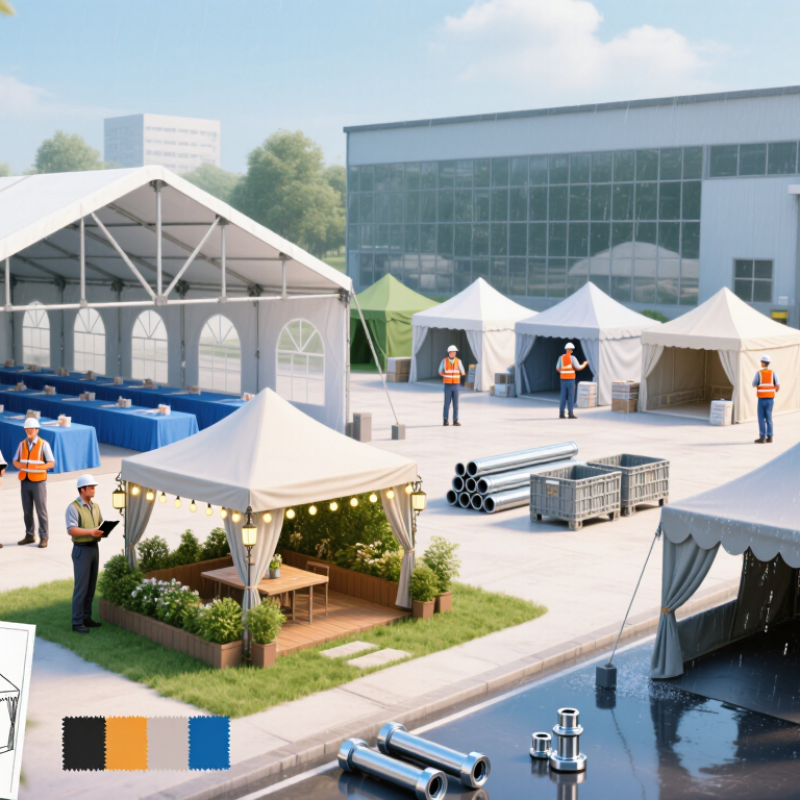
Choosing an event tent starts with its purpose. A wedding reception may need clear sightlines, space for dining tables, and room for a small stage. A product exhibition often benefits from an open floor plan and wide entry points. For a short outdoor gathering, a compact canopy may be enough. Match the tent to the activity, not just the guest list.
Structure affects both layout and installation. Pole tents use central supports and tensioned fabric, which can create a graceful roof but may interrupt interior layouts. Frame tents rely on a supporting frame, while clear-span designs avoid interior poles across the main area. Check the ground, access for installation equipment, and expected weather before choosing. The widest option is not always the most practical.
Span and capacity need careful attention. A larger span can create a more open space, but it may require suitable anchoring and a level site. Estimate capacity using the actual setup: chairs in rows take less floor area than banquet tables, and stages, catering stations, and aisles all reduce usable space. Measure twice. A common planning mistake is counting people without allowing room to move. Confirm dimensions and installation requirements with a qualified supplier, and treat capacity figures as estimates until the final layout is set.
Trade directories can help you build a shortlist of Chinese event-tent suppliers before making contact. Search by product type, such as clear-span structures, pagoda tents, or modular marquees. Compare specifications rather than relying on polished photos. Ask for fabric weight, frame material, wind-load documentation, and packing dimensions. Details matter.
Trade exhibitions offer a useful way to inspect samples and speak directly with sales and technical staff. Bring a short project brief with venue size, expected weather, and installation dates. Ask how the tent connects to flooring, lighting, and sidewalls. Take notes; busy booths can make small details easy to miss. Request recent project references and sample inspection reports, then verify that they match the model being quoted.
Factory clusters can make supplier visits more efficient, since related manufacturers and material vendors may operate within the same region. A visit can reveal workshop organization, welding quality, fabric cutting, and packing practices. Look closely at seams and fittings. Still, one tidy production line does not prove consistent quality across every order. Confirm production capacity, quality checks, lead times, and spare-parts arrangements in writing. If travel is not practical, ask for a live video walkthrough that shows the workshop floor and the actual product under discussion.
When sourcing event tents in China, compare the structure and fabric as a complete system, not as separate selling points. Aluminum frames are often easier to handle and resist corrosion, while steel can offer a sturdy structure at a greater weight. Alloy grade, wall thickness, joint design, and finish matter more than a material label alone. Small details matter.
For the cover, request fabric weight, coating type, UV performance, water resistance, and seam construction. PVC-coated polyester is common, but its quality varies. Ask how ratings were tested and whether seams and repaired areas were included. A thick fabric can still leak at a poorly finished seam. I would not treat a tidy spec sheet as proof; that is an easy mistake.
Span affects more than appearance. Wider, column-free layouts may need stronger beams, larger connections, and a site-specific engineering review. Compare stated wind and snow loads, their units, and the conditions behind each rating. Ask whether the figures assume sidewalls, open sides, or particular anchoring. Then match them to the venue, ground, exposure, and local weather expectations. If load data lacks a clear test basis or signed calculations, pause and ask for clarification before ordering.
| Tent Type | Typical Frame Material | Common Fabric Specification | Typical Clear Span | Weather-Load Information to Request | Common Event Uses | Key Trade-Off |
|---|---|---|---|---|---|---|
| Clear-span modular tent | Structural aluminum alloy profiles; steel connectors and base plates may be used. | PVC-coated polyester roof and wall fabric, commonly around 650–900 g/m²; ask for coating, tear-strength, flame-performance, and UV-test details. | Often supplied in modular widths of about 10–50 m; larger spans require project-specific engineering. | No universal rating. Request the project-specific wind speed or pressure, snow load, anchoring design, and the configuration each rating covers. | Exhibitions, trade fairs, temporary halls, and large receptions. | Open interior space and flexible length; larger spans need more substantial engineering and anchoring. |
| Steel-frame event tent | Galvanized or coated structural steel tubes and fittings. | PVC-coated polyester, commonly around 550–750 g/m²; confirm whether the stated weight applies to the roof, walls, or both. | Commonly about 5–30 m, depending on frame design and configuration. | Ask for calculations and test or design documentation for the complete tent, including frame, joints, ballast or anchors, and permitted open-wall conditions. | Storage, catering, industrial events, and medium-to-large temporary covered areas. | Robust frame option, but generally heavier to transport and handle than an aluminum system. |
| High-peak or pole tent | Aluminum or steel center poles, perimeter poles, and tensioned ropes or webbing. | PVC-coated polyester or coated textile; fabric weight and performance vary by supplier and intended use. | Commonly about 6–20 m; usable layouts depend on pole positions and anchoring space. | Wind performance depends strongly on site conditions, rope layout, stakes, and soil. Require a documented limit for the exact installation; do not infer a rating from fabric weight. | Outdoor celebrations, community events, and temporary dining areas. | Distinctive peaked roof; center poles and guy lines reduce usable space and need clear ground around the tent. |
| Pagoda or small marquee tent | Aluminum or steel frame with a peaked roof structure. | PVC-coated polyester, often around 450–650 g/m²; request separate roof and wall specifications. | Common module sizes are approximately 3–10 m wide; units can sometimes be joined where designed for it. | Obtain the rated wind and snow conditions for the exact size, connection method, anchoring, and wall arrangement. | Registration areas, kiosks, entrances, catering stations, and small hospitality spaces. | Compact and easy to arrange in groups; not a substitute for an engineered large-span structure. |
| Inflatable event structure | Air-supported fabric structure with blower-supported or sealed-air design; anchoring system is essential. | Coated polyester or other coated technical textile; compare fabric strength, seam construction, and fire-performance documentation. | Varies widely, commonly from small structures to spans of several tens of metres. | Request the manufacturer’s operating wind limit, required blower or backup arrangements, anchoring plan, and evacuation or shutdown procedures. | Promotional events, temporary attractions, and specialist installations. | Can create unusual shapes and rapid visual impact; operation and safe use depend on the specific inflation system. |
Important: Span and fabric figures are indicative market ranges, not guaranteed specifications. There is no single weather-load rating for a tent type: the approved rating must be calculated for the exact structure, site, anchoring, surface, and operating configuration. For projects in China, ask a qualified local engineer or supplier to verify applicable local requirements and provide the design documents, load assumptions, and installation instructions. Do not use a tent outside its documented limits or during severe weather.
When sourcing a large event tent in China, ask whether its design and documentation address EN 13782:2015. The standard covers temporary tents with floor areas over 50 m², including safety during design, erection, use, maintenance, and dismantling. Ask for the area calculation; a tent’s stated size can be unclear when sections or extensions are added. Get the structural documents and written wind limits, too. Paperwork matters.
On site, check that the anchoring plan matches the actual ground, not just a supplier’s sample drawing. A grass field, paved plaza, and coastal venue need different planning. Ask who inspects the frame, connections, and fabric before guests arrive, and what conditions require evacuation or dismantling. Keep those instructions in writing. Small details count.
EN 13782:2015 is a useful reference, but it does not replace local rules or venue requirements. Confirm which edition and national adoption apply to your project, and review fire-safety and access requirements separately. A polished proposal is not proof of safe installation. I’d want the documents checked against the real site; that step is easy to rush.
Where to Find Top Tents for Events in China?
A reliable supplier should show test records, not just polished photographs. Ask for inspection results covering frame joints, fabric seams, water resistance, and wind-load testing. Confirm which tests apply to your tent’s size and configuration. A report for a smaller model may not prove the larger structure performs the same way. Request dated records, material specifications, and clear acceptance criteria. Small details matter.
Installation support should include labeled drawings, anchoring guidance, and a named technical contact who can answer questions during setup. Ask whether support is on-site or remote, and what happens if parts are missing. Shipping deserves equal scrutiny: UNCTAD’s Review of Maritime Transport 2024 notes that more than 80% of world trade by volume moves by sea, making packing and schedule coordination practical concerns. Request container dimensions, a packing list, shipment milestones, and a plan for delays. After-sales terms should identify spare-part availability, response times, and warranty coverage in writing. Even a strong checklist can miss a rushed handoff; confirm responsibilities before production begins.
Aluminum is often lighter to handle and resists corrosion. Steel can feel sturdier, but weighs more. Check alloy grade, wall thickness, joints, and finish. Material labels alone tell little.
Ask for fabric weight, coating, UV performance, water resistance, and seam construction. PVC-coated polyester varies in quality. A thick cover can still leak at a poorly finished seam.
Compare wind and snow loads, units, and test conditions. Ask whether ratings include sidewalls, open sides, and specific anchoring. Unclear figures deserve follow-up.
Wider, column-free spaces may need stronger beams and larger connections. Ask for a site-specific engineering review. Looks can mislead.
Ask whether the design documents address EN 13782:2015. Request the area calculation, structural documents, and written wind limits. Added sections can make the stated size unclear.
Match it to the actual ground. Grass, paving, and coastal exposure can require different planning. A sample drawing may not fit your site.
Clarify who checks the frame, connections, and fabric. Get evacuation or dismantling triggers in writing. This step is easy to rush, and I would not assume it happens automatically.
No. Confirm the applicable edition and national adoption. Review local venue, fire-safety, and access requirements separately. Paperwork is not proof of safe installation.
Finding the right Tents For Events in China starts with defining the event’s needs. Consider the tent’s purpose, structure, clear span, and expected capacity, then identify suppliers through trade directories, industry exhibitions, and manufacturing clusters. A suitable design should balance usable space, setup requirements, and the conditions it will face.
Compare frame materials, fabric specifications, span options, and rated weather loads rather than relying on appearance alone. For tents larger than 50 m², ask how the design addresses the safety requirements in EN 13782:2015 and request relevant documentation. Before ordering, verify factory testing procedures, installation guidance, shipping arrangements, and after-sales support. These checks can help buyers assess product suitability, plan installation, and reduce avoidable delays from selection through delivery.