An In-Depth Technical Guide to Commercial Glamping, Architectural Tensile PVC Yurt Tents, High-Altitude Thermal Engineering, and Direct Factory Supply Chains.
Explore our export-ready modular event marquees, high-peak party canopies, and architectural PVC yurt tent solutions manufactured for global commercial deployment.
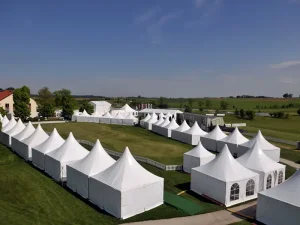
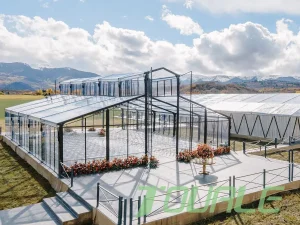
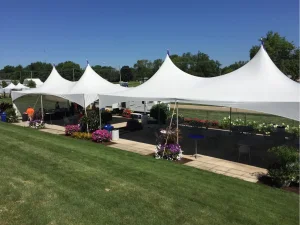
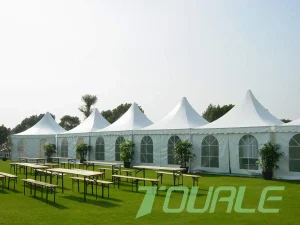
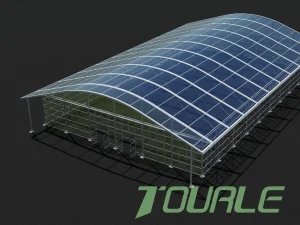
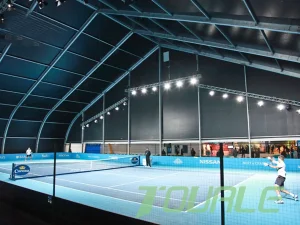
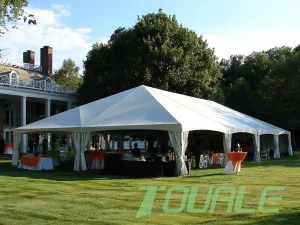
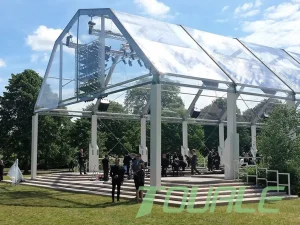
The transition from traditional organic tenting materials to engineered architectural PVC/PVDF composite yurts is transforming outdoor commercial hospitality, eco-tourism resorts, and industrial temporary facilities worldwide.
The global luxury glamping market is projected to reach $6.3 billion by 2030, driven by consumer demand for immersive natural experiences. High-performance PVC yurt tents have become the structural foundation for four-season resorts due to their structural permanence, aesthetic appeal, and high ROI per square meter.
Traditional cotton canvas yurts suffer from mildew rot, thermal loss, and low wind tolerance. Modern commercial buyers demand engineered PVC composite membranes (650–900 g/m²) combined with high-tensile T6061-T6 aluminum skeletons capable of withstanding hurricane-force wind loads up to 120 km/h and heavy snow loads.
Commercial operators cannot secure operating permits without strict international compliance. Architectural PVC yurts exported by professional manufacturers feature flame-retardant properties certified to DIN 4102 B1, M2, and NFPA 701, meeting rigorous municipal safety regulations across North America and Western Europe.
A rigorous breakdown of the material science, metallurgy, and synthetic polymer technology that makes PVC yurt tent services the superior choice for commercial exporters and resort developers.
Unlike standard tarpaulins, high-end PVC yurt tents utilize double PVC-coated high-tenacity polyester fabrics coated with a top layer of PVDF (Polyvinylidene Fluoride) lacquer. This creates an ultra-smooth, hydrophobic surface that sheds dirt, rain, and snow automatically during precipitation.
The structural integrity of modern commercial yurt tents relies on precision-engineered skeletons. Manufacturers utilize hard-pressed extruded aluminum alloy T6061-T6 or hot-dip galvanized steel frames to ensure lifetime rust protection and structural stability.
To achieve year-round occupancy in alpine or desert microclimates, high-performance PVC yurts employ a multi-layer insulation matrix engineered to maximize R-values without adding structural strain.
Blocks 100% of liquid penetration and reflects 82% of thermal radiation via high solar reflective index (SRI).
Double-sided radiant barrier preventing conductive and radiant heat transfer in extreme cold or hot environments.
Flame-retardant interior liner offering sound absorption, aesthetic luxury, and moisture condensation control.
Analyzing how commercial developers adapt PVC yurt tent services to suit localized climatic conditions, building regulations, and customer expectations across key international markets.
In regions such as Colorado, Banff, and the Pacific Northwest, yurt tent buyers prioritize heavy snow loading and high R-value insulation. PVC yurts in these zones feature integrated wood-stove chimney flues, double-glazed glass windows, and reinforced structural hubs capable of handling extreme freeze-thaw cycles.
Desert hospitality in Saudi Arabia, UAE, and Oman demands high UV solar protection and sandstorm hermetic seals. Manufacturers supply heavy-duty PVDF coated membrane yurts with specialized dust-proof zip systems, high-efficiency HVAC duct integration, and reflective beige/sand color palettes that blend seamlessly into desert landscapes.
European operators (France, UK, Scandinavia, Australia) operate under strict environmental protection laws prohibiting concrete foundation pours. Modular PVC yurts are paired with self-balancing wooden deck platform systems anchored via ground screws, guaranteeing zero-impact land installation and easy decommissioning.
How cutting-edge research in polymer chemistry, smart building automation, and off-grid technology is defining the next generation of PVC yurt tent structures.
Application of Titanium Dioxide (TiO2) photocatalytic nanocoatings onto PVDF membranes. Under sunlight exposure, the material decomposes organic grime and dust naturally, reducing resort maintenance labor costs by over 60%.
Embedding lightweight, flexible Building-Integrated Photovoltaics (BIPV) directly onto the curved PVC roof skin. Allows off-grid glamping yurts to generate self-sustaining electricity for interior lighting, heating, and USB charging.
Integration of automated skylights and perimeter ventilation vents connected to temperature/humidity sensors. Yurts automatically adjust airflow, opening roof caps during peak heat and sealing tight under rain or wind conditions.
Transitioning toward 100% circular PVC composite membranes utilizing bio-based plasticizers and post-consumer recycled polyester fibers, lowering the embedded carbon footprint of commercial resort builds.
A side-by-side technical evaluation comparing Architectural PVC Yurt Tents against traditional canvas options, geodesic domes, and permanent timber structures.
| Evaluation Parameter | Architectural PVC Yurt Tent | Traditional Cotton Canvas Yurt | Geodesic Dome Tent | Permanent Timber Cabin |
|---|---|---|---|---|
| Structural Frame Material | Anodized T6061-T6 Aluminum / Galvanized Steel | Lattice Wood / Bamboo Rafters | Powder-Coated Steel Pipes | Heavy Timber / Wood Frame |
| Cover Material Lifespan | 10 – 15+ Years (PVDF PVC Fabric) | 2 – 4 Years (Prone to Rot & Mildew) | 6 – 10 Years (PVC Cover) | 25+ Years (Wood / Shingles) |
| Wind Load Resistance | 100 – 120 km/h (Engineered) | 50 – 70 km/h (Moderate) | 100 – 120 km/h (High) | 140+ km/h (Very High) |
| Fire Retardancy Standard | Certified DIN 4102 B1 / M2 / NFPA 701 | Low / Requires Chemical Treatment | Certified DIN 4102 B1 | Variable / High Risk |
| Assembly Speed & Labor | Fast (1-2 Days / Unit, 2-3 Crew) | Moderate (Requires Skilled Craftsmanship) | Fast (1 Day / Unit) | Slow (Months of Construction) |
| Permitting & Foundation | Temporary / Semi-Permanent (Easy Permit) | Temporary Structure | Temporary Structure | Permanent (Strict Zoning Permits) |
| Cost Per Square Meter ($) | Moderate ($$$) - High Commercial ROI | Low ($$) - High Maintenance Cost | Moderate ($$$) | Very High ($$$$$) |
Explore our complete OEM export portfolio, including sports arena covers, large A-frame warehouse tents, pop-up trade show marquees, and heavy-duty frame tents.
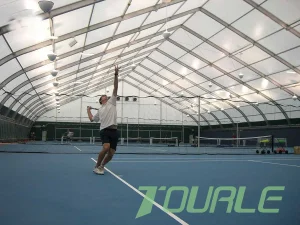
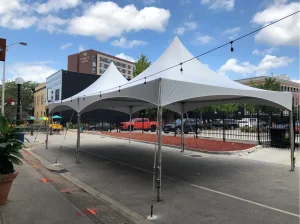
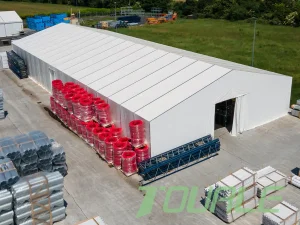
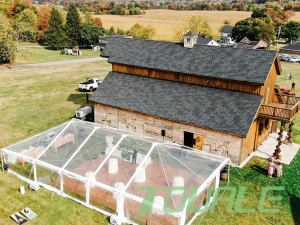
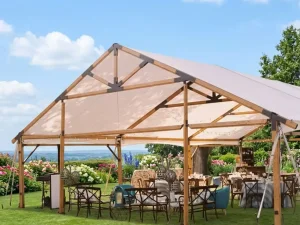
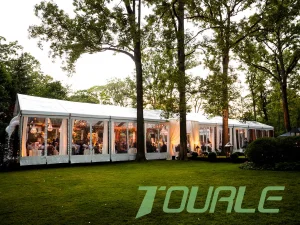
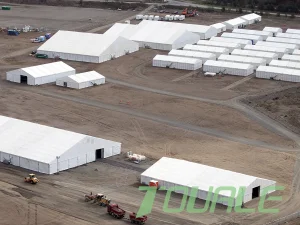
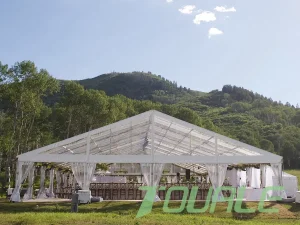
Sichuan Tulele Technology Co., Ltd. (Tourle Tent) combines 15+ years of structural engineering mastery with rigorous in-house production and full-process trial assembly.
Unlike trading intermediaries, Tourle Tent operates an integrated 18,000 square meter factory in Chengdu, China, complete with an independent hardware CNC workshop established in 2019. Every aluminum rafter, galvanized steel bracket, and custom PVC cover is produced under unified quality standards to guarantee precise component fitment during field assembly.
To eliminate expensive delays for international importers, every customized PVC yurt tent order undergoes full pre-shipment trial assembly. Our quality assurance engineers test frame tensioning, membrane sealing, zipper alignments, and hardware stress points before timber crate packing and overseas export container loading.
Detailed technical answers addressing common structural, commercial, shipping, and customization queries regarding PVC yurt tent services.
Whether you are planning a 50-unit luxury resort expansion, an outdoor commercial restaurant, or seeking reliable factory OEM tent manufacturing, our engineering team provides direct technical consultation, 3D CAD modeling, and factory-direct export quotes.