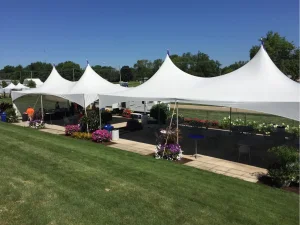
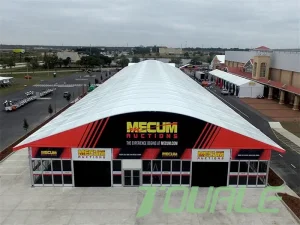
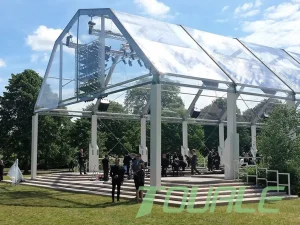
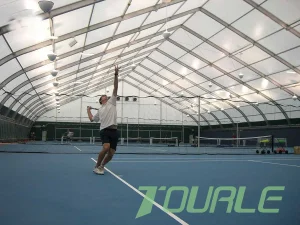
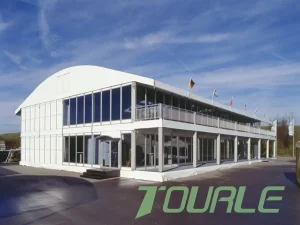
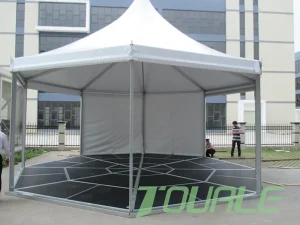
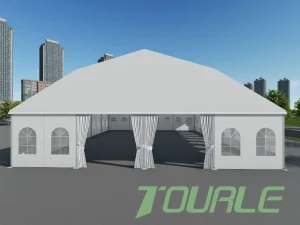
Engineered for maximum structural integrity, rapid assembly, and year-round weather defense.
Deconstructing the commercial demand, structural geometry, and supply chain value proposition of Twin Emperor Bell Tents.
In the rapidly maturing landscape of global experiential lodging and high-capacity outdoor event infrastructure, procurement decision-makers no longer seek simple canvas shelters; they demand engineered micro-architectural solutions. When enterprise buyers query search engines to "Buy Twin Emperor Bell Tent Service & Exporters", the underlying transactional intent encompasses rigorous parameters: structural longevity, certified fire retardancy, localized climate resilience, and scalable factory OEM customization.
The Twin Emperor Bell Tent (frequently designated in commercial specifications as a dual-center-pole oval canvas marquee) represents a quantum leap in footprint utilization compared to single-pole conical bell tents. By introducing a double-center-pole tensioning ridge, this architecture expands usable interior floor area to 24m² - 48m² while establishing distinct functional zoning—enabling resort operators to accommodate multi-room luxury suites, king-size bedding configurations, integrated ensuite sanitary modules, or high-density lounge seating.
Information Gain Insight: Unlike standard single-peak conical tents that suffer from aggressive wall-slope volume reduction, the Twin Emperor geometry utilizes an elongated cross-ridge supported by dual vertical A-frames or heavy-duty steel center masts. This increases head-height clearance (>3.0 meters) across 65% of the interior footprint, drastically boosting guest comfort metrics and RevPAR (Revenue Per Available Room) for eco-resort investors.
Analyzing global demand trajectories, capital expenditure efficiency, and regional market adoption.
The global glamping and luxury outdoor lodging market is projected to reach $6.2 billion by 2030, driven by a compound annual growth rate (CAGR) exceeding 12.8%. Commercial operators in North America, Western Europe, the Middle East, and Southeast Asia face increasing pressure to balance rapid resort commissioning timelines against capital expenditure (CapEx) risk.
Permanent brick-and-mortar hospitality developments require extensive environmental impact permits, high civil engineering costs, and construction timelines ranging from 18 to 36 months. In contrast, heavy-duty Twin Emperor Bell Tents categorized as temporary or semi-permanent fabric structures bypass traditional planning gridlocks while delivering payback periods as brief as 4 to 8 months.
Drastically reduced initial capital investment relative to permanent chalets, yielding accelerated break-even timelines for resort operators.
Engineered to meet low-impact eco-tourism regulations in national parks, coastal reserves, and environmentally sensitive zones.
Advanced hydrophobic canvas treatments and structural reinforcement allow continuous operation across extreme thermal ranges (-20°C to +50°C).
Factory-grade component specifications for enterprise B2B procurement evaluations.
A true commercial-grade Twin Emperor Bell Tent must adhere to rigorous metallurgical and textile standards. Substandard consumer tents utilize 200 GSM untreated cotton or light polyester fabrics prone to UV degradation, seam slipping, and rot within months of field deployment. Enterprise-level exporters manufacture under strict ISO quality controls, specifying heavy-duty poly-cotton canvas or specialized architectural PVC membranes.
| Engineering Component | Standard Commercial Specification | Heavy-Duty Enterprise Spec | Performance Certification |
|---|---|---|---|
| Main Roof Canvas | 320 g/m² Ripstop Poly-Cotton (65/35) | 420 g/m² Organic Cotton / PVC Composite | ISO 13934 Tensile / BS 7837 Flame |
| Hydrostatic Coating | 3,000 mm PU Coating + Fluorocarbon WR | 5,000 mm Nano-Silicone Hydrophobic Seal | EN 20811 Hydrostatic Head Rating |
| Groundsheet Module | 540 g/m² Heavy-Duty Zip-In PVC | 650 g/m² Structural Welded Anti-Slip PVC | REACH Compliant / 100% Waterproof |
| Center Mast System | Ø38mm x 1.5mm Zinc-Plated Steel Pipe | Ø48mm x 2.0mm Anodized Aluminum / Steel | FEA Structural Wind Load Verified |
| A-Frame Door Support | Ø22mm x 1.2mm Steel Rod Frame | Ø25mm Heavy-Duty Integrated Arch Rods | Rust-Inhibited Powder Coated |
| Guy Ropes & Hardware | 6mm Reflective Nylon + Metal Tensioners | 8mm High-Tenacity Polyester + Alloy Clamps | Break Strength > 450 kgf |
| Insect Screening | B3 Fine Polyester Mesh (Black) | High-Density Micro-No-See-Um Mesh | Airflow-Optimized Tear Resistant |
Because hospitality tents remain pitch-erected across multi-month seasonal rotations, micro-climatic humidity accumulation between interior condensation and exterior rainfall creates ideal mold propagation environments. Professional exporters apply deep-immersion anti-fungal treatments during yarn spinning. This ensures mold resistance up to Class 0 (ISO 846 standard), guaranteeing that the canvas matrix prevents fungal spore penetration even under continuous 95% relative humidity conditions.
Computational analysis of force distribution, ground anchoring physics, and wind shear mitigation.
The primary structural challenge of large canvas marquees lies in managing lateral wind loads and snow accumulation. The double-peak silhouette of the Twin Emperor Bell Tent presents an aerodynamic profile designed to shed wind pressure when anchored correctly. The dual center posts act as primary axial load-bearing columns, transferring vertical tension forces downward into structural ground footings.
The 45-degree roof pitch angle optimizes the coefficient of drag ($C_d$), allowing winds up to Beaufort Scale 9 (80-100 km/h) to glide over the canvas surface without inducing destructive structural harmonics.
Utilizing 30cm to 45cm ribbed steel rebar stakes driven at a 60-degree counter-angle to guy rope vectors. System delivers pull-out load thresholds exceeding 250 kg per anchor point.
Horizontal webbing straps connecting the dual center apexes dissipate dynamic stress concentrations, preventing canvas tearing along high-friction ridge lines under gusting loads.
Tailoring tent specifications for glamping chains, luxury event hire, and commercial developers.
Direct factory procurement allows enterprise buyers to bypass off-the-shelf limitations and configure Twin Emperor Bell Tents tailored precisely to site requirements, regional climate demands, and brand aesthetic guidelines. Exporters with dedicated engineering departments provide full OEM/ODM manufacturing workflows.
Ensuring frictionless international import compliance, safety certifications, and optimized freight packaging.
Navigating international import regulations requires structural and safety compliance documentation. Reputable Chinese exporters maintain compliance credentials required by municipal building inspectors and commercial insurers in North America, Europe, Australia, and the GCC region.
Fabric materials tested and certified under CPAI-84 (North American Camping Tent Standard), NFPA 701, BS 7837, and European DIN 4102 B1 fire safety codes.
HS Code classification (typically HS 6306.22 for synthetic tents or HS 6306.29 for cotton tents) backed by Certificate of Origin (Form E, Form F, EUR.1) documentation.
Tents packed into heavy-duty 600D PVC waterproof carry bags inside double-wall corrugated export cartons, palletized for FCL/LCL container shipping.
Explore our complete range of specialized hospitality, sports, and industrial event marquees.
Addressing critical operational, engineering, and export inquiries from international buyers.