Featured export structures engineered for commercial, hospitality, and mega-event deployments worldwide.
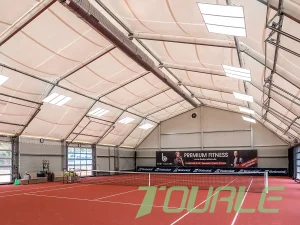
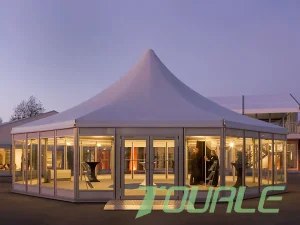
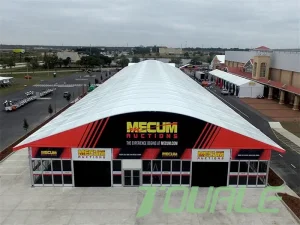
The commercial outdoor hospitality, eco-resort, and glamping sectors are undergoing a structural evolution. Driven by shifting consumer preferences toward high-value experiential travel and immersive nature stays, resort developers worldwide are migrating away from traditional, capital-intensive brick-and-mortar construction. In this economic landscape, geodesic resort tent domes have emerged as the premier structural asset class, offering unmatched capital efficiency, rapid site deployment, and minimal environmental footprint.
However, the global procurement market presents a key operational paradox: commercial resort buyers need cheap resort tent dome products to maximize Internal Rate of Return (IRR) and shrink payback periods, yet they cannot compromise on structural safety, snow/wind resistance certifications, thermal comfort, or long-term operational durability. Resolving this tension requires understanding modern industrial manufacturing, advanced architectural metallurgy, membrane chemistry, and direct factory-exporter dynamics.
When evaluated through Buckminster Fuller’s principles of geodesic geometry, spherical domes achieve the highest interior volume-to-surface-area ratio of any architectural enclosure. This structural efficiency reduces material consumption by up to 40% compared to rectangular footprints of equivalent square footage. For resort developers, this translates to lower raw material overheads, reduced freight weights, faster structural assembly, and optimized heating, ventilation, and air conditioning (HVAC) thermodynamic efficiency.
To evaluate cheap resort tent dome exporters, procurement managers must look beyond surface pricing and inspect the structural integrity and material science of the underlying components. Below is a detailed breakdown of industrial dome engineering specifications.
High-grade commercial resort domes utilize either hot-dip galvanized Q235 steel tubing or structural-grade 6061-T6 aluminum alloy profiles. Structural tubing undergoes multi-stage anti-corrosion treatments, including chemical degreasing, zinc phosphate passivation, and hot-dip galvanization (min 60µm coating thickness), finished with outdoor epoxy powder coating. This protects the core frame from rust, salt-spray oxidation, and chemical degradation in extreme coastal or desert microclimates.
The exterior envelope typically uses 650 g/m² to 950 g/m² high-density Polyvinyl Chloride (PVC) coated polyester textiles treated with Polyvinylidene Fluoride (PVDF) topcoats. The PVDF layer creates a self-cleaning surface that repels dirt, atmospheric pollutants, and industrial fallout via rainwater sheet action. Crucially, high-tier membranes feature specialized UV-stabilizers and inorganic pigment loading to resist yellowing, micro-cracking, and loss of tensile strength under intense sunlight exposure.
Achieving four-season resort comfort requires multi-layer thermal systems. Top exporters integrate composite inner lining systems combining double-faced aluminum foil radiant barriers, high-density hydrophobic synthetic cotton wool insulation (100–300g/m²), and soft interior decorative fabrics (velvet, canvas, or synthetic suede). This barrier prevents internal condensation while reducing heat loss, maintaining stable indoor ambient temperatures in sub-zero or high-heat environments.
Because geodesic domes distribute aerodynamic pressure uniformly across their triangular structural lattice, they generate significantly lower drag coefficients ($C_d \approx 0.3$) than vertical-walled buildings. A properly anchored 8-meter diameter geodesic dome with a 32x2mm steel pipe framework can withstand wind gusts up to Beaufort Scale 11–12 (103–120 km/h) without structural deformation.
| Spec Category | Standard Commercial (Budget) | High-Grade Resort (Standard) | Extreme-Environment (Luxury) |
|---|---|---|---|
| Primary Frame Material | Q195 / Q235 Galvanized Steel Pipe | Q235 Hot-Dip Galvanized + Powder Coat | 6061-T6 Structural Aluminum Alloy |
| Pipe Dimensions | Φ25mm × 1.5mm Wall Thickness | Φ32mm × 2.0mm Wall Thickness | Φ38mm to Φ48mm × 3.0mm Wall |
| Membrane Weight & Type | 650 g/m² PVC Fabric | 850 g/m² PVDF Coated PVC | 950 g/m² Heavy-Duty PVDF / Glass Shell |
| Fire Safety Rating | DIN 4102 B1 / NFPA 701 | DIN 4102 B1 / M2 Standard | B1 / M1 Flame Retardant + Low Smoke |
| Temperature Tolerance | -30°C to +70°C | -40°C to +70°C | -50°C to +80°C (Polar/Desert Rated) |
| Service Life Expectancy | 5 to 8 Years | 10 to 12 Years | 15 to 20+ Years |
The global dominance of Chinese factory exporters in the modular, structural tent, and geodesic dome domain is supported by deep manufacturing advantages, advanced hardware integration, and unparalleled raw material clusters. Sourcing directly from top Chinese tent manufacturing hubs—such as Sichuan, Guangdong, and Zhejiang—provides commercial resort buyers with structural economic advantages that cannot be replicated locally.
Chinese tent manufacturers operate within specialized industrial ecosystems. High-precision aluminum extrusion plants, steel tube cold-drawing mills, automated CNC laser processing facilities, chemical coating plants, and industrial PVC weaving mills operate within close geographic proximity. This eliminates inter-tier transit latency and drastically lowers component procurement costs.
Modern Chinese dome factories deploy automated multi-axis CNC pipe cutters, robotic MIG/TIG welding cells, and high-frequency PVC membrane welding systems. Computerized fabrication guarantees sub-millimeter tolerances on node connection plates, bolt holes, and strut lengths—eliminating site installation errors during field setup.
Tier-1 Chinese factory exporters conduct 100% full-structure trial assemblies in their facilities prior to ocean packing. Every structural frame bay, zip system, membrane tensioner, and door frame connection is stress-tested to guarantee zero component mismatch or missing hardware when delivered overseas.
A primary factor driving the adoption of resort tent domes is their versatility across diverse geography and extreme climate conditions. Custom engineered dome systems adapt to localized terrain requirements and regulatory frameworks worldwide.
Primary Environmental Stressors: Extreme UV irradiation, daytime temperatures over 50°C, abrasive sandstorms, dramatic diurnal temperature drops.
Engineering Configuration: Domes are built with 850g/m² TiO2-infused PVDF covers boasting 99.5% UV reflectivity, double radiant-barrier insulation, integrated solar shading canopies, heavy-duty floor seals, and custom HVAC ducts designed for 5-ton split units or centralized cooling.
Primary Environmental Stressors: Heavy snow loads (up to 0.5 kN/m²), freezing winds, internal condensation build-up.
Engineering Configuration: Upgraded Φ38x3mm structural steel or 6061-T6 aluminum frames with reinforced node connectors, steep 5/8 or 3/4 geodesic frequency ratios for efficient snow shed, 300g/m² thermal inner liners, and wood-stove chimney flashing kits with fire-proof silica fabric collars.
Primary Environmental Stressors: High humidity, salt-spray corrosion, seasonal typhoons/hurricanes, high insect concentration.
Engineering Configuration: 6061-T6 anodized aluminum frame structures or hot-dip galvanized steel with marine-grade fluorocarbon coatings, stainless steel (SUS316) assembly bolts, anti-microbial mold-resistant fabric treatments, integrated screen ventilation mesh, and high-tension earth screw anchor systems.
Leading Chinese factory exporters offer comprehensive modular solutions beyond the dome shell. Sourcing suites include prefabricated modular ensuite bathroom pods (comprising composite glass-fiber trays, smart toilets, and integrated plumbing manifold manifolds), raised deck sub-frame systems, integrated solar PV roof skins, and blackwater/greywater bio-digester filtration systems for environmentally sensitive wilderness zones.
Procuring cheap resort tent domes requires a structured risk-mitigation framework. B2B buyers must evaluate vendors on engineering capability, factory capacity, quality assurance processes, and international shipping protocols.
Ensure your chosen exporter provides independent third-party laboratory test reports (SGS, TUV, or Intertek). Critical compliance standards include DIN 4102 B1 and NFPA 701 fire retardancy certificates, tensile/tear strength reports according to ISO 13934 / ISO 4674, and structural wind-load calculation books verified by licensed structural engineers.
Structural framework components should be bundled in heavy-duty scratch-resistant PVC wrapping or custom wooden crates. Delicate items—such as glass windows, solar exhaust fans, and door lock assemblies—must be packed in double-wall corrugated cartons secured on export-standard fumigated timber or steel pallets to maximize container utilization and prevent ocean transit damage.
Evaluate whether the manufacturer provides comprehensive installation assets: 3D exploded assembly diagrams, step-by-step video tutorials, CAD structural anchoring layouts, and options for remote video guidance or on-site field engineering assistance during major installation phases.
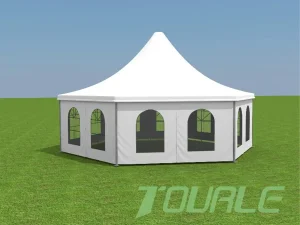
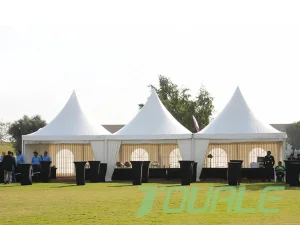
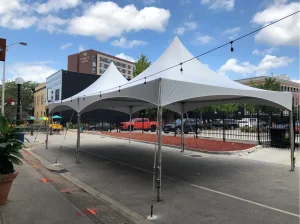
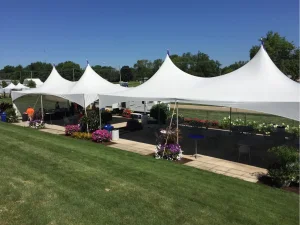
Complete your resort or event infrastructure with specialized frame systems and high-peak marquees.

Expert insights into engineering, ordering, logistics, and site preparation for international buyers.
Cost reduction in professional resort tent domes is achieved through geodesic material optimization and direct factory-exporter manufacturing efficiencies—not by using inferior components. Geodesic structures require up to 40% less raw framing material than standard buildings for the same floor area. Sourcing directly from Chinese factories cuts out intermediary distributor markups, grants direct access to local aluminum/steel industrial clusters, and leverages automated CNC production to reduce labor overheads.
A properly engineered geodesic dome is one of the aerodynamic structures known. Its spherical shape allows high winds to pass smoothly over the surface without creating the massive drag pressure associated with flat vertical walls. Standard commercial domes (6m to 10m diameter) built with Φ32x2mm or Φ38x3mm structural steel/aluminum frameworks are rated to withstand wind speeds up to 100 to 120 km/h (Beaufort Scale 11–12) when anchored properly using expansion bolts on concrete or heavy earth screws on soil.
Professional exporters use heavy-duty architectural PVC coated polyester fabrics (650–950 g/m²) finished with a protective PVDF (Polyvinylidene Fluoride) lacquer. The PVDF top layer reflects UV radiation, prevents dirt accumulation through self-cleaning action, and resists fungal growth. In harsh tropical or high-heat desert climates, high-grade PVDF membranes maintain structural integrity, color, and waterproof performance for 8 to 12+ years, while structural aluminum or hot-dip galvanized steel frames last 15 to 20+ years.
Yes. Commercial resort domes utilize a multi-layer thermal barrier system. Between the exterior PVDF membrane and interior decorative lining, factories install a high-density thermal insulation layer (aluminum foil radiant barrier combined with 100g/m² to 300g/m² synthetic cotton insulation). This setup retains heat during winter and reflects solar heat in summer. Duct ports are built into the structure for seamless integration with mini-split AC units, heat pumps, or wood-burning stoves.
Resort tent domes do not require deep foundation footings, significantly reducing site prep costs. The most common platforms are wooden or Composite WPC elevated decks, concrete pads, or compacted gravel beds. Anchoring varies by substrate: concrete expansion anchors for solid slabs, heavy-duty earth screw anchors for soil or grass, and weighted ballast plates where ground penetration is restricted.
Full-service factory exporters offer comprehensive OEM/ODM options: custom dome diameters (from 4m up to 50m clear-span), frame color powder coatings, clear PVC or glass panoramic bay windows, skylight placements, multiple entrance door frame types (glass doors, aluminum doors, zip doors), custom branded logo printing, and pre-engineered interior layouts for ensuite bathrooms and mezzanine lofts.
Factory manufacturing lead times typically range from 15 to 25 days depending on batch size and degree of customization. Domes pack efficiently due to their modular, disassembled strut design. A standard 40ft High Cube (40HQ) shipping container can hold approximately 12 to 15 complete 6-meter dome units (including frames, covers, and insulation liners), significantly lowering international freight costs per unit.
Exporters supply certified fire-retardant architectural membranes compliant with international building safety standards, including German DIN 4102 B1, French M2, and American NFPA 701. These self-extinguishing materials do not support combustion, drop molten material, or emit toxic flames, ensuring smooth fire marshal sign-offs during local commercial licensing approvals.