Engineered clear-span aluminum alloy frame tents and customizable timber tipi structures optimized for high-capacity events, commercial glamping, and emergency logistics.
In the evolving landscape of experiential architecture and temporary infrastructure, Custom Large Tipis (frequently designated as giant hat tipis, Kata tipis, or Scandinavian event conical structures) have transitioned from niche eco-lodging novelties into high-yield commercial assets. Today, global hospitality conglomerates, festival management companies, and municipal event organizers actively source specialized large-scale tipis to build atmospheric, weather-resistant, and structural-grade temporary spaces.
Modern custom large tipi engineering demands a sophisticated synthesis of organic aesthetics and rigorous structural integrity. Unlike standardized residential camping tents, commercial large tipis utilize heavy-duty solid timber poles—primarily slow-grown Nordic Spruce, Douglas Fir, or extruded wood-grain aluminum alloys—coupled with high-tenacity, flame-retardant canvas polymers (such as double-coated PVC or heavily treated poly-cotton canvas exceeding 450 gsm). These assemblies are precision-engineered to endure severe environmental stressors, including wind speeds up to 120 km/h (0.75 kN/m²) and cumulative snow loads up to 0.5 kN/m², making them fully compliant with European EN 13782 standards for temporary structures.
Certified engineering blueprints accommodating local building codes, structural fire resistance (DIN 4102 B1 / NFPA 701), and severe meteorological load calculations for year-round commercial operations.
Proprietary zipper-and-channel interconnection systems allowing multiple tipis (e.g., Giant Hat 10.3m series) to link seamlessly into massive, multi-zonal, weatherproof indoor-outdoor complexes.
Commercial glamping operators and event rental companies typically realize complete asset payback within 4 to 8 event bookings due to premium pricing models attached to luxury outdoor venues.
As global procurement teams seek optimal balances between strict quality control and total cost of ownership (TCO), premier Chinese manufacturers such as Sichuan Tulele Technology Co., Ltd. (Tourle Tent) have redefined international supply chain expectations. Operating from a modern 18,000㎡ integrated production facility in Chengdu, China, Tourle Tent integrates advanced architectural engineering, in-house hardware milling, and automated textile tailoring.
Established in 2019, Tourle Tent's specialized metalworking division fabricates custom steel connectors, baseplates, tensioning ratchets, and aluminum profiles independently, assuring 100% component compatibility and rapid spare parts availability.
To eliminate expensive on-site deployment delays for overseas buyers, every manufactured tipi frame and canvas cover undergoes mandatory full-scale trial assembly and multi-point quality inspection prior to container loading.
Leveraging China's comprehensive industrial supply ecosystem, Tourle Tent achieves 30%–45% direct cost efficiency over Western manufacturers without compromising raw material specifications or structural safety margins.
Custom Large Tipis and modular tent systems provide unmatched versatility across diverse commercial sectors. Below is an architectural overview of how global enterprises deploy these structures to drive operational revenue:
Large tipis function as central dining pavilions, spa hubs, or high-margin VIP guest suites. Integrated with raised timber decking, insulated double-skin liners, and climate control (HVAC/wood stoves), tipis extend resort operating seasons into sub-zero winters.
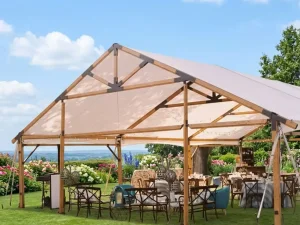
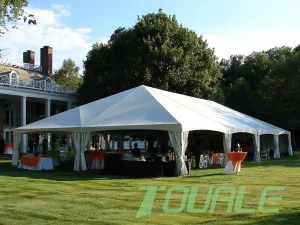
Event hire operators combine multiple 10.3m Giant Hat tipis with timber-frame marquee walkways. The natural organic silhouette paired with interior fairy lighting creates a premium rustic aesthetic highly sought after for corporate summits and high-end weddings.
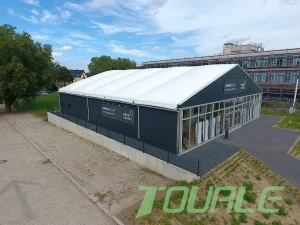
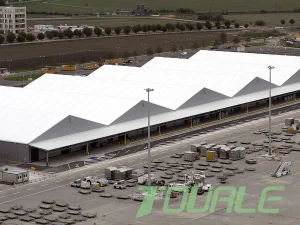
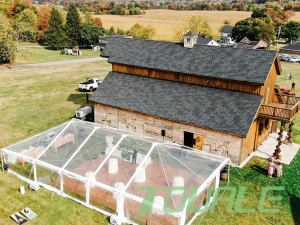
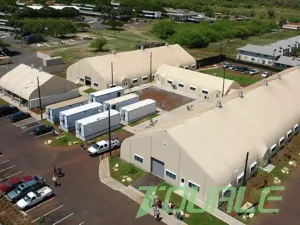
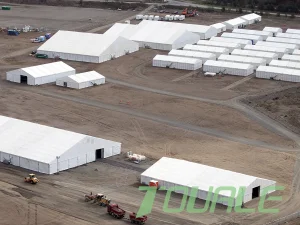
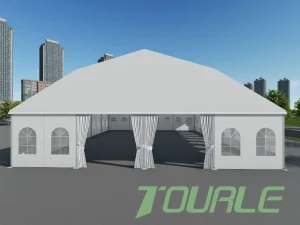
When rapidly expanding industrial facilities require temporary dry storage or climate-controlled staff quarters, clear-span A-frame and TFS curve tents provide immediate, foundation-free space solutions operational in under 48 hours.
To assist enterprise buyers, structural engineers, and fleet procurement managers in selecting the optimal temporary structure, the following comparative engineering analysis highlights key performance parameters across structural formats:
| Structure Architecture | Primary Structural Material | Wind Load Rating | Snow Load Capacity | Expected Lifespan | Optimal Commercial Use |
|---|---|---|---|---|---|
| Giant Hat Tipi (10.3m) | Nordic Spruce Poles / Wood-Grain Alloy + Poly-Cotton Canvas | 100 km/h (10-11 Beaufort) | 0.3 - 0.5 kN/m² | 10+ Years (Frame) / 5-8 Yrs (Canvas) | Experiential Hospitality, Weddings, Festivals |
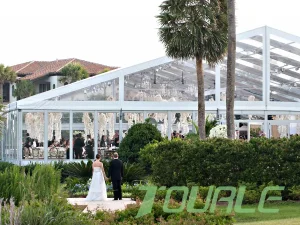
| Clear-Span A-Frame Tent | Hard-Pressed Extruded Aluminum Alloy (6061/T6) | 120 km/h (12 Beaufort) | 0.5 - 0.75 kN/m² | 20+ Years (Frame) / 8-10 Yrs (PVC Cover) | Industrial Storage, Trade Shows, Large Exhibitions |
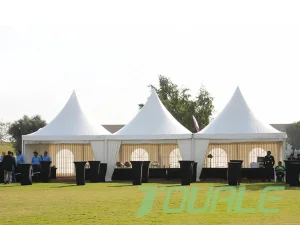
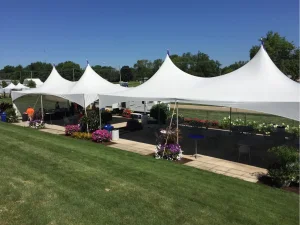
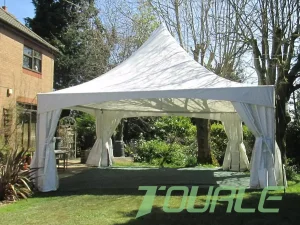
| High-Peak Pagoda Tent | Corrosion-Resistant Anodized Aluminum Frame | 80 - 100 km/h | 0.25 kN/m² | 15+ Years (Frame) / 5-7 Yrs (Cover) | Reception Hubs, Entrance Canopies, Market Booths |
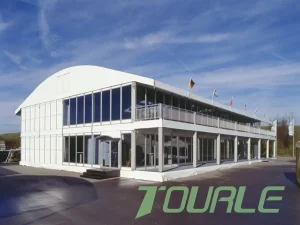
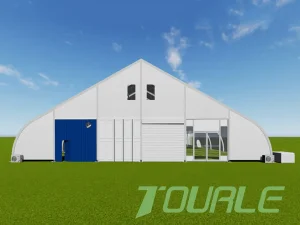
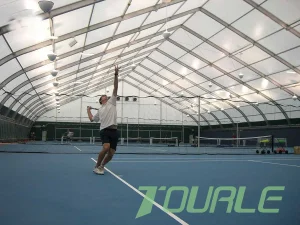
| TFS High-Curve Structure | Reinforced Curved Aluminum Truss + High-Tension PVC | 120 km/h Continuous | 0.75 kN/m² Heavy Duty | 20+ Years Structural Rating | Sports Arenas, Aviation Hangar, Industrial Hubs |
| Geodesic Dome Pavilion | Q235 Hot-Dip Galvanized Steel Tubing | 120 - 140 km/h High Stability | 0.5 kN/m² | 15+ Years (Galvanized Frame) | Eco-Lodge Suites, Pop-Up Brand Activation Pavilions |
As environmental sustainability directives and digital site-monitoring technologies transform commercial construction, the custom large tipi industry is undergoing rapid engineering modernization:
Advancements in multi-layered micro-porous thermal membranes allow semi-permanent tipis to reduce interior heating/cooling energy consumption by up to 40%, supporting carbon-neutral glamping goals.
Transitioning from pure natural timber to engineered glulam spruce and wood-grain anodized aluminum profiles drastically increases rot resistance, minimizes structural warping, and ensures precise tolerance during automated assembly.
Enterprise tipis deployed in extreme high-altitude or coastal environments are increasingly fitted with wireless tension sensors that transmit real-time structural stability data directly to site facility managers.
Direct answers to the critical engineering, logistical, and customization questions asked by international buyers, fleet managers, and resort developers.
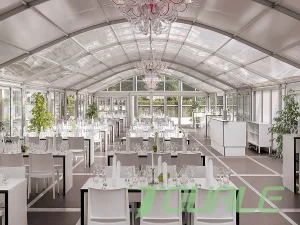
Explore our broader portfolio of engineered temporary structures, curved TFS systems, transparent arch tents, and heavy-duty polygon industrial warehouses.
Consult directly with Sichuan Tulele Technology Co., Ltd. engineering specialists for technical drawings, customized structural quotes, and factory direct procurement scheduling.