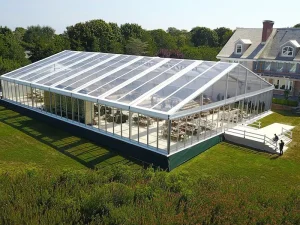
Explore our industrial-grade clear-span event marquees, glamping pods, and high-peak temporary structures manufactured to EN 13782 and NFPA 701 compliance standards.
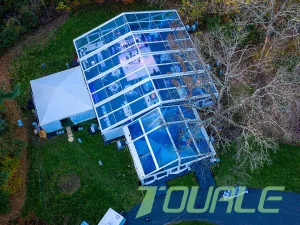
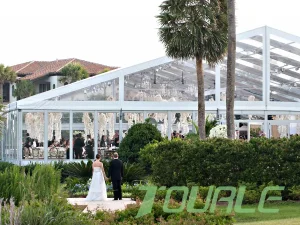
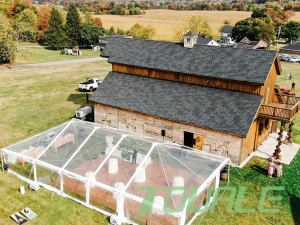
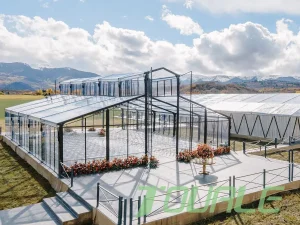
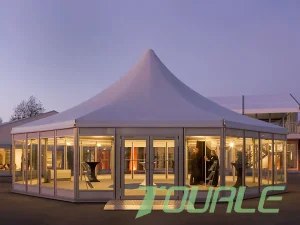
The global luxury outdoor accommodation market, commonly searched under the French nomenclature "tente de glamping", has transitioned from a niche eco-tourism trend into a highly institutionalized asset class. Driven by post-pandemic shifts in consumer preferences toward experiential travel, biophilic architecture, and low-impact tourism, commercial developers, boutique resort operators, and event staging enterprises are deploying semi-permanent membrane structures at scale.
According to recent market intelligence, the global glamping industry is projected to surpass USD 6.2 billion by 2030, exhibiting a Compound Annual Growth Rate (CAGR) exceeding 11.4%. This commercial surge has shifted the technical requirements placed upon top-tier glamping tent manufacturers and companies. No longer are simple canvas bell tents sufficient for commercial viability. Modern B2B procurement demands heavy-duty engineered structures capable of withstanding extreme climatological stresses, complying with strict municipal building codes, and offering four-season luxury HVAC integration.
From an operational vantage point, regional market adoption demonstrates distinct procurement priorities:
To deliver structural integrity that rivals permanent brick-and-mortar hospitality units, leading manufacturers employ rigorous metallurgical and polymer engineering principles. A commercial-grade tente de glamping or event marquee represents a complex balance between dead weight, wind uplift, snow accumulation, and thermal dynamics.
The primary load-bearing framework of industrial event tents and luxury glamping units utilizes high-tensile extruded aluminum alloys, specifically 6061-T6 and 6082-T6. These alloys undergo artificial aging heat treatments to achieve an ultimate tensile strength exceeding 310 MPa and a yield strength of 275 MPa.
Compared to standard mild steel, anodized 6061-T6 aluminum offers an unbeatable strength-to-weight ratio while maintaining intrinsic resistance to galvanic and atmospheric corrosion. For structural steel components—such as base plates, ridge connectors, and steel stakes—leading factories implement hot-dip galvanization compliant with ISO 1461, delivering a minimum zinc coating thickness of 85 μm to prevent rust in high-salinity coastal environments.
6061-T6 and 6082-T6 structural grade aluminum profiles with anodized surface finishing (15-20 μm) ensuring zero structural deterioration over 15+ years of continuous exposure.
Double PVC-coated polyester textiles (650–950 g/m²) treated with PVDF topcoats for superior hydrophobic performance, self-cleaning anti-stain properties, and zero mold growth.
Rigorous fire retardation certified to German DIN 4102 B1/B2, French M2, and American NFPA 701, alongside calculated structural wind resistance up to 120 km/h (Beaufort 12).
The roof covers and sidewalls of commercial marquees and glamping pods utilize heavy-duty synthetic architectural textiles. Standard specifications incorporate a high-tenacity polyester woven base fabric (typically 1000D x 1000D thread density) encapsulated on both sides by liquid Polyvinyl Chloride (PVC) coatings.
To eliminate long-term surface degradation, advanced manufacturers apply a fluoropolymer lacquer topcoat—specifically PVDF (Polyvinylidene Fluoride) or PTFE (Polytetrafluoroethylene). This chemical surface matrix achieves three crucial performance metrics:
| Performance Parameter | Luxury Glamping Safari Tent | Geodesic Dome Lodge | Clear-Span Event Marquee | TFS Curved Sport Tent |
|---|---|---|---|---|
| Frame Material | Heavy Duty Steel / Timber + Alum | Q235 Powder-Coated Steel Pipe | Extruded Alum Alloy 6061-T6 | High-Strength Alum 6082-T6 |
| Membrane Weight | 750 – 850 g/m² PVC / Canvas | 850 g/m² Blockout PVC | 650 – 850 g/m² Double PVC | 900 g/m² Heavy Duty PVDF |
| Wind Load Rating | 80 – 100 km/h (10 Beaufort) | 100 – 120 km/h (11 Beaufort) | 100 km/h (10 Beaufort) | 120 km/h (12 Beaufort) |
| Snow Load Capacity | 0.25 – 0.35 kN/m² | 0.50 – 0.75 kN/m² | 0.20 – 0.30 kN/m² | 0.40 – 0.60 kN/m² |
| Fire Retardancy Standard | DIN 4102 B1 / NFPA 701 | DIN 4102 B1 / NFPA 701 | EN 13501-1 / M2 / B1 | DIN 4102 B1 / NFPA 701 |
| Operating Temperature | -30°C to +70°C | -40°C to +70°C | -30°C to +70°C | -30°C to +70°C |
| Estimated Lifespan | 10–12 Yrs Fabric / 20+ Frame | 10 Yrs Fabric / 15+ Frame | 10–15 Yrs Fabric / 20+ Frame | 15 Yrs Fabric / 25+ Frame |
Over the past two decades, China has emerged as the global epicenter for advanced architectural membrane structure manufacturing. Companies like Tourle Tent (Sichuan Tulele Technology Co., Ltd.) demonstrate how Chinese manufacturing clusters deliver unmatched value, engineering precision, and rapid scalability for B2B buyers worldwide.
The core competitive advantages offered by leading Chinese OEM/ODM tent factories rest upon four structural pillars:
Unlike European or North American assemblers who outsource extrusion, machining, and hardware components to third parties, top Chinese manufacturers operate complete in-house hardware workshops. From computerized CNC aluminum cutting and precision robotic welding to automated punch pressing, every bracket, purlin, and tensioner is built in-house, ensuring absolute dimensional accuracy and batch consistency.
A major risk in international structural procurement is on-site fitment failure. Quality-focused Chinese factories solve this through mandatory 100% pre-shipment trial assembly routines. Large-scale marquees, geodesic domes, and safari frames are erected within the factory testing grounds (such as Tourle’s 18,000+ m² facility) to verify bolt hole alignment, fabric tensioning, and seam waterproof integrity before export packaging.
The raw material supply ecosystem in China—spanning raw aluminum ingot suppliers, technical textile weaving mills, and specialized hardware coating plants—is geographically concentrated. This cluster effect significantly reduces transport lead times, lowers raw material input costs, and enables factories to offer pricing 30% to 50% more competitive than Western counterparts without compromising raw material grade.
Information Gain Insight: Sourcing directly from an established Chinese manufacturer with ISO 9001 certification and integrated CAD/3D modeling capabilities enables resort developers to reduce Capital Expenditure (CAPEX) per key by up to 40%, accelerating the ROI payback window for new glamping resorts to under 18 months.
Deploying semi-permanent membrane structures globally requires precise adaptation to local geographical, climatological, and commercial conditions. Professional tente de glamping manufacturers customize structural configurations to meet specialized environmental challenges:
Challenge: Excessive snow accumulation and sub-zero thermal transfer.
Engineering Solution: Implementation of steep roof pitch configurations (e.g., A-frame or high-spine TFS curve tents), internal thermal insulation lining composed of multi-layer aluminum foil synthetic cotton, and integrated chimney ports for wood-burning stoves or high-efficiency heat pumps.
Challenge: Violent wind gusts, extreme humidity, and salt fog oxidation.
Engineering Solution: Electrophoretic anodized aluminum profiles, marine-grade SS316 stainless steel tension cables and fasteners, continuous perimeter wall anchors embedded into concrete strip footings, and anti-fungal PVDF fabric coatings.
Challenge: Thermal radiation exceeding 50°C, sandstorm abrasion, and intense UV exposure.
Engineering Solution: Dual-layer roof systems featuring a ventilated air gap between the outer flysheet and inner luxury cabin, high-SRI PVDF membranes reflecting over 80% of solar radiation, and dust-proof perimeter skirting with integrated heavy ballast trays.
When evaluating international manufacturers for glamping tents and event structures, enterprise buyers must look beyond the initial FOB unit price and conduct a comprehensive Total Cost of Ownership (TCO) calculation. The TCO model spans five critical expenditure phases:
As the commercial outdoor sector matures, leading global manufacturers are incorporating cutting-edge technological advancements to redefine luxury outdoor living and commercial event hosting:
Modern luxury glamping units are increasingly equipped with integrated smart home networks. Automated weather-sensing roof vents, app-controlled climate management, integrated LED accent channels, and smart keyless entry systems are now factory-prewired into the frame channels during manufacturing.
Flexible thin-film photovoltaic (BIPV) panels are being directly laminated onto the outer PVDF membrane surfaces. This allows glamping pods located in remote eco-resorts to generate autonomous electricity for lighting, water pumps, and ventilation without compromising structural aesthetics.
Architectural demand is heavily leaning toward full-panoramic wall integrations. High-clarity polycarbonate wall panels, double-glazed insulated tempered glass wall systems, and high-spine transparent PVC atrium roofs are replacing standard solid canvas walls to deliver uninterrupted immersion in nature.
Browse our additional specialized modular tent structures engineered for multi-purpose commercial venues, athletic complexes, and corporate exhibitions.
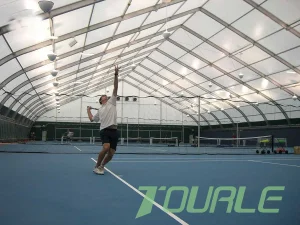
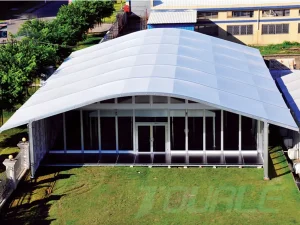
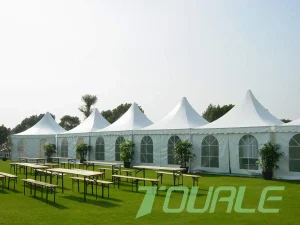
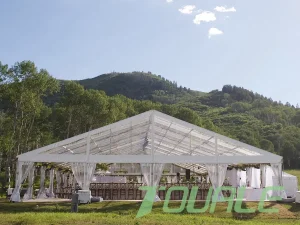
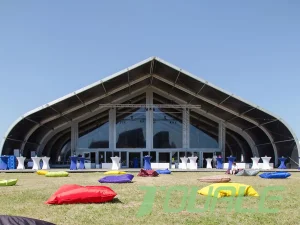
Expert engineering answers to critical inquiries regarding manufacturer validation, structural safety, import logistics, and custom OEM/ODM capabilities.
To establish true E-E-A-T credentials and verify direct manufacturing status, enterprise buyers should request three primary proof points: (1) An ISO 9001:2015 quality management system certificate specifically naming manufacturing and production scope; (2) A live video audit or unedited drone walkthrough of the physical workshop (e.g., verifying CNC extrusion cutting, fabric high-frequency welding lines, and dedicated hardware assembly bays); (3) Proof of in-house trial assembly facilities where full-scale structures are erected before packing.
For permanent or semi-permanent glamping resort developments, structures should be engineered to withstand minimum wind speeds of 100 km/h to 120 km/h (10 to 12 Beaufort scale), calculated in accordance with EN 13782 standards. In alpine or high-latitude regions subject to winter snowfall, specify a minimum snow load capacity of 0.30 kN/m² to 0.75 kN/m², or select steep-pitched TFS curved roof structures that facilitate automatic snow shedding.
In European jurisdictions, architectural membrane materials must achieve flame retardancy certification under DIN 4102 B1/B2 or EN 13501-1 (Class B-s2, d0). For the United States and Canada, compliance with NFPA 701 (National Fire Protection Association) Large Scale test or California State Fire Marshal (CSFM) Title 19 is mandatory. Premium manufacturers incorporate flame-retardant additives directly into the PVC polymer matrix, ensuring compliance that does not degrade over time or wash out with rainfall.
Double-layer PVC membrane systems featuring an encapsulated air gap or integrated synthetic thermal batting deliver drastically superior U-values compared to single-layer cotton canvas. In desert environments, outer PVDF high-SRI coatings reflect up to 80% of solar radiation, reducing interior HVAC power consumption by 30-40%. In sub-zero winter conditions, insulated double-membrane cabins prevent thermal bridging and internal condensation buildup, allowing year-round guest occupation.
Standard manufacturing lead times for customized OEM glamping units or commercial marquees range from 15 to 25 working days post CAD drawing approval. Because aluminum structural profiles and membrane covers are engineered for compact flat-packing, logistics efficiency is maximized: a single 40ft High Cube (40HQ) container can comfortably transport up to 1,500 m² to 2,000 m² of modular clear-span frame tents or 8 to 12 fully equipped safari glamping units.
Yes. Reputable manufacturers employ in-house structural engineering teams capable of generating complete 3D CAD models, structural wind load calculation books, anchoring foundation plans, and mechanical reaction force diagrams. These documents can be submitted to local certified engineers (PE stamping) for rapid municipal planning and building permit approval.
Whether you are master-planning a luxury eco-resort, expanding an event hire fleet, or developing specialized sports venues, our engineering team provides turnkey CAD designs, structural calculations, and factory-direct pricing.