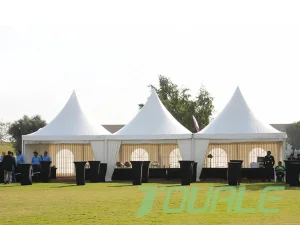
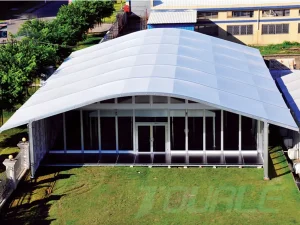
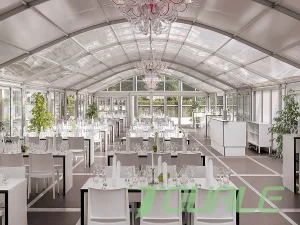
Explore our factory-engineered clear-span frame structures, custom marquee setups, and commercial glamping foundations ready for global deployment.
An analytical overview of the structural transition toward experiential hospitality, high-yield eco-tourism, and modular off-grid resort developments worldwide.
The global glamping market is projected to expand at a CAGR exceeding 11.8% through 2032. Commercial safari tents represent the highest revenue-generating asset class due to their structural durability, rapid deployment timeline, and premium RevPAR (Revenue Per Available Room) performance across diverse eco-resort portfolios.
Modern hospitality investors are shifting away from rigid brick-and-mortar hotel construction toward semi-permanent structural canvas lodges. Safari glamping tents offer minimal land disturbance, tax-optimized depreciation schedules, and compliance with strict environmental zoning laws in protected nature reserves.
Off-the-shelf consumer tents fail to meet commercial hospitality standards. B2B buyers require Original Design Manufacturing (ODM) services to incorporate integrated HVAC ducting, structural snow load engineering, fire-retardant membrane standards, and custom multi-room floorplans optimized for luxury guest stays.
Unlike standard leisure camping equipment, commercial safari glamping tents are architectural-grade investments. Choosing an established ODM partner ensures that structural frames, tensioning hardware, and double-layer roof skins are engineered to withstand continuous commercial occupancy, high guest turnaround, and severe environmental stress.
Dissecting the metallurgical, fabric membrane, and structural specifications that define commercial-grade outdoor safari architecture.
High-tier ODM manufacturing relies on heavy-duty, extruded aluminum alloys (such as T6061-T6) or pressure-treated, anti-corrosion timber beams (such as Douglas Fir or pressure-impregnated pine). Frames are calculated to withstand localized wind forces up to 100–120 km/h, utilizing hot-dip galvanized steel connectors for rust resistance in marine or high-humidity environments.
The exterior roof system incorporates tensioned PVC or PVDF synthetic membranes (750–1050 g/m²) engineered with anti-UV, anti-fungal, and flame-retardant properties compliant with DIN 4102 B1 and NFPA 701 standards. Inner tent walls utilize heavy-duty, breathable ripstop cotton-polyester canvas (420–550 g/m²) that provides thermal comfort and condensation control.
ODM safari tents feature dual-layer roof air gaps that act as natural thermal chimneys, reducing interior temperatures by up to 8°C in tropical climates. Thermal insulation layers (polyethylene bubble aluminum foil or synthetic insulation batting) can be integrated between the inner canvas and outer rainfly to support year-round luxury heating and cooling systems.
How leading ODM safari tent companies provide end-to-end engineering, manufacturing, and spatial execution for commercial hospitality projects.
Top-tier ODM providers do not merely sell tents; they conduct topographic spatial planning. Utilizing 3D CAD modeling and BIM integration, engineers map anchor placement, elevation platforms, wind corridors, and luxury deck extensions to fit natural landscape topographies.
ODM safari tent designs incorporate pre-engineered Mechanical, Electrical, and Plumbing (MEP) conduits. Concealed wiring channels, integrated luxury bathroom partitioning, hot water routing, and solar solar array mountings are embedded into the structural framing system.
To minimize soil disruption and comply with national park regulations, ODM solutions utilize elevated steel-chassis foundation platforms or eco-composite wood decking. These platforms lock directly into ground screw anchors, eliminating the need for massive concrete pours.
How ODM safari glamping tents are customized to perform flawlessly across extreme climate zones and geographic conditions worldwide.
| Geographic Zone | Primary Environmental Challenge | ODM Structural Adaptation | Material Specification |
|---|---|---|---|
| Desert & Arid Regions (e.g., Middle East, North Africa) |
Extreme UV degradation, daytime heat (>50°C), sandstorm abrasion. | Triple-skin UV-reflecting PVDF roof canopy; sealed dual-wall zipper gaskets; desert sand-anchoring plates. | 1050 g/m² PVDF fabric; anti-abrasion aluminum frames with sand-anodized protective coating. |
| Tropical & Coastal Zones (e.g., Southeast Asia, Caribbean) |
Monsoon rains, high humidity, salt fog corrosion, typhoon-force gusts. | Elevated pile-foundation chassis; anti-corrosion T6061-T6 aluminum or hot-dip galvanized steel; high-pitch roof slope for rapid rain shedding. | Anti-fungal, mildew-resistant canvas membranes; 316 marine-grade stainless steel tensioning hardware. |
| Alpine & Mountain Regions (e.g., North America, European Alps) |
Heavy snow loading, sub-zero temperatures (-25°C), freeze-thaw cycles. | High-load roof truss reinforcement; thermal barrier insulation liners; integrated wood-stove chimney flashing kits. | Insulated multi-layer membrane envelopes; high-tensile steel structural reinforcement beams. |
| Eco-Forest & Wildlife Reserves (e.g., East Africa, Oceania) |
Zero-footprint environmental restrictions, wildlife interaction risks. | Screw-anchor foundation systems; elevated deck platforms (1.5m+); silent zip mesh windows; camouflage canvas tones. | Breathable 100% organic cotton-poly blend canvas; non-toxic eco-coatings; heavy-duty anti-tear insect mesh. |
Pioneering the next era of smart, sustainable, and ultra-durable luxury safari tent architecture.
Integration of flexible, lightweight Building-Integrated Photovoltaics (BIPV) directly onto the outer PVDF roof canopy. This innovation allows safari tents to generate up to 2.5 kW of clean solar energy per unit, achieving full off-grid operational independence for remote wilderness resorts.
Implementation of nanotech surface treatments that actively repel dust, sap, and organic debris. Micro-abrasions in the PVC/PVDF coating repair themselves under direct sun exposure, extending membrane operational lifespan from 8 to 15+ years.
Embedded sensor networks that monitor real-time membrane tension, internal humidity, air quality, and wind displacement. Automated ventilation flaps and smart HVAC zoning adjust dynamically to guest presence and weather forecasts.
Replacing conventional steel structural brackets with ultra-lightweight carbon-fiber composite connectors and ethically harvested engineered bamboo timber, reducing total supply chain carbon footprint by over 45%.
Essential criteria commercial buyers must evaluate when selecting an ODM safari glamping tent manufacturer.
Verify whether the vendor operates an independent hardware and canvas production facility or merely subcontracts components. Integrated in-house production guarantees strict dimensional tolerance control, consistent anodizing quality, and seamless spare parts availability.
Before ocean freight packaging, professional ODM factories pre-erect every custom frame and fabric cover on site. This full-process trial assembly verifies bolt hole alignments, tensioning geometry, and seam waterproofing to eliminate expensive on-site installation delays.
Ensure all architectural membranes carry authentic lab certifications for flame retardancy (DIN 4102 B1/B2, NFPA 701), structural snow/wind load calculations stamped by licensed engineers, and ISO 9001 quality management verification.
Direct technical and procurement answers provided by senior structural engineers and B2B project directors.
Discover additional high-capacity event marquees, transparent arch venues, and multi-span commercial structures.