Direct factory OEM/ODM architectural structures engineered for extreme weather resilience and rapid field deployment.
The global commercial outdoor accommodation and event architecture landscape has undergone a paradigm shift over the past decade. Traditional temporary structures—historically dominated by soft-PVC tension tents and basic polycarbonate domes—are rapidly giving way to structural glass igloos and geodesic glass domes. This transition is driven by consumer demand for immersive 360-degree nature experiences combined with the uncompromising thermal performance and architectural longevity required by luxury commercial operators.
Modern OEM Glass Igloo products represent a sophisticated convergence of structural engineering, aerospace-grade metallurgy, and advanced building envelope technology. Unlike early glass structures that suffered from excessive solar heat gain, condensation, and structural vulnerability, today’s engineered geodesic glass igloos leverage double- and triple-glazed Low-E insulated glass units (IGU), structural silicone structural glazing, and high-strength T6 6061/6063 aluminum alloy framing systems.
Integration of Low-Emissivity coatings, Argon gas-filled IGUs, and thermally broken aluminum extrusion profiles achieving thermal transmittance values as low as U < 1.1 W/m²K for sub-zero polar environments.
Triangulated geodesic geometry distributes structural loads uniformly, offering unparalleled wind resistance (up to 140 km/h) and heavy snow load capacities (up to 1.2 kN/m²) compared to planar buildings.
Laminated acoustic safety glass configurations attenuate environmental noise levels by up to 42 dB, enabling luxury hospitality quiet zones in urban rooftops and wilderness eco-resorts alike.
For commercial developers, resort operators, project managers, and rental companies, sourcing OEM glass igloos requires balancing initial capital expenditure (CAPEX) against long-term operational resilience and revenue density. B2B buyers rarely look for standardized consumer off-the-shelf tents; their search intent centers on engineered compliance, custom dimensions, architectural integration, and reliable factory supply chains.
| Evaluation Vector | Standard Market Specification | Enterprise OEM Industrial Grade | Procurement Impact |
|---|---|---|---|
| Structural Framework | Standard Mild Steel or Thin Aluminum | T6 6061 / 6063 High-Strength Anodized Aluminum Alloy | Prevents oxidation, reduces structure weight by 40%, extends anti-corrosion life to 25+ years. |
| Glazing System | Single Tempered or Polycarbonate Sheets | Double/Triple Glazed Tempered Low-E Glass with Structural Argon Gap | Drastically lowers HVAC energy consumption, eliminates interior glass fogging and condensation. |
| Sealant & Weatherproofing | Basic PVC Gaskets & Open Silicone Joints | Automotive-grade EPDM gaskets with Structural Silicone Structural Sealant | Guarantees IP68 water tightness under heavy continuous downpours and atmospheric pressure shifts. |
| OEM Customization Scope | Fixed Catalog Sizes (4m, 6m) | Bespoke Radius, Automated Sunshades, Smart Glass, Integrated HVAC/Plumbing Ports | Allows seamless integration with boutique resort master plans and local building code mandates. |
Enterprise buyers must evaluate OEM suppliers on structural finite element analysis (FEA), wind tunnel test verification, and international structural code compliance (including EN 13782 for temporary structures and relevant local seismic codes). Working directly with established OEM factories ensures structural engineering stamped by certified personnel.
Glass igloo glamping units command average daily rates (ADR) 150% to 300% higher than traditional canvas tent suites. The year-round operational capability—unaffected by freezing temperatures or intense heat—enables commercial resorts to maintain 80%+ occupancy year-round.
China's modern architectural manufacturing sector has evolved from high-volume assembly to high-precision engineering and Industry 4.0 digital fabrication. Specialized manufacturing bases—such as those operated by leading technology enterprise clusters in Sichuan (e.g., Sichuan Tulele Technology Co., Ltd.)—combine advanced robotics, 5-axis CNC machining, and automated glass processing to deliver complex geodesic glass igloos with sub-millimeter tolerances.
Geodesic aluminum node connectors and structural hub components require multi-angle bevel cuts and precise bolt-hole alignments. 5-axis CNC automated machining guarantees total error bounds under ±0.2mm across hundreds of structural nodes.
Operating proprietary hardware and extrusions production workshops eliminates reliance on third-party component suppliers, reducing production lead times by up to 35% and guaranteeing structural component replacement compatibility.
Every customized OEM glass igloo batch undergoes complete trial erection and load testing on factory grounds before export packaging. This pre-shipment validation guarantees that on-site assembly overseas is smooth and delay-free.
Shipping fragile glass structures internationally poses severe transit breakage risks if packaged incorrectly. Modern OEM manufacturing centers employ heavy-duty steel A-frame cradles, customized foam CNC cutouts, and vacuum-sealed moisture protection inside ocean freight containers. This modular flat-pack methodology maximizes container volume utilization while keeping glass breakage rates below 0.1% globally.
The structural versatility and architectural distinction of OEM glass igloos enable seamless integration across wildly divergent climatic zones and commercial business models.
Deploying heated glass technology prevents snow accumulation on the dome top while maintaining crystal-clear sky visibility. Sub-floor heating integration and thermal break frames allow guests to view the Aurora Borealis in ambient sub-zero conditions.
Metropolitan hospitality venues utilize glass igloos to transform underutilized rooftop terraces into climate-controlled VIP dining rooms during cold weather months, dramatically boosting year-round food and beverage revenue.
Utilizing highly reflective solar Low-E tinting and automated motorized solar shade curtains reduces internal solar heat loading. Integrated ventilation cowls and high-capacity HVAC ducting maintain cool interior luxury in high ambient environments.
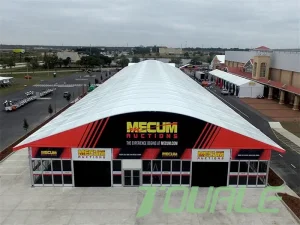
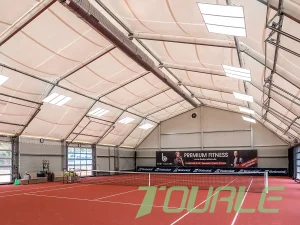
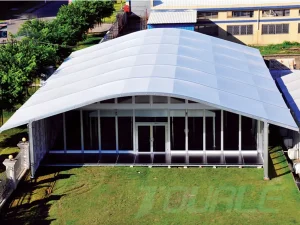
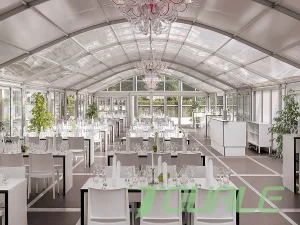
Explore our extended range of high-peak marquees, polygon sports halls, and clear-span architectural event tents engineered for global exports.
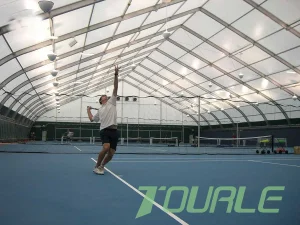
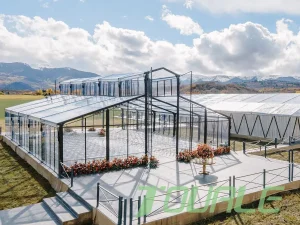
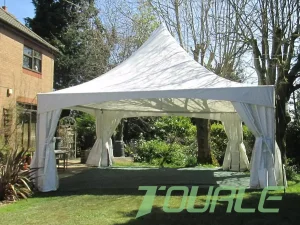
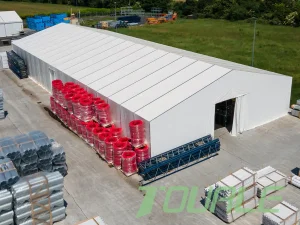
Answers to key questions asked by commercial procurement officers, resort developers, and structural engineers prior to finalizing contract orders.
Industrial-grade OEM glass igloos constructed with T6 6061/6063 aluminum alloy frameworks and double-tempered insulated glass have an engineered design lifespan exceeding 25 years. Most OEM manufacturers offer a 5-to-10 year structural warranty on aluminum extrusions and IGU glass seal integrity against desiccation failure under normal operation.
Geodesic domes inherently exhibit superior wind load dynamics due to their spherical drag coefficient reduction. Standard structural glass igloo configurations are certified to withstand wind velocities up to 120 km/h - 140 km/h. For snow loads, the curved surface naturally encourages snow shedding; additionally, heated electric glass configurations can be specified to melt snow build-up instantly in high-altitude arctic installations.
Yes. OEM customization allows full structural pre-drilling for off-grid utility routing, including sub-floor plumbing inlets, electrical conduits, solar PV micro-grid integration, micro-sewage connections, and specialized fresh air heat exchange ventilation loops (HRV/ERV systems) built directly into the base frame ring.
Condensation occurs when warm moist interior air touches a cold surface. OEM glass igloos prevent fogging by utilizing Double-Glazed Insulated Glass Units (e.g., 6mm Tempered + 12A Argon Gap + 6mm Low-E Tempered) featuring warm-edge aluminum spacer bars and desiccant matrixes. Thermally broken aluminum frame profiles stop thermal bridging between cold exterior nodes and warm interior air.
Standard OEM production lead times range between 20 to 35 business days depending on custom diameter size, glass tint specifications, and order batch volume. Ocean freight transit varies by destination port (e.g., 14-18 days to US West Coast, 28-35 days to European main ports). Full-process trial assembly QC occurs during the production window to prevent on-site delays.
Every OEM production run generates a digital BIM structural model and standardized glass panel CAD layout chart for each dome diameter. If a panel breaks during operational service, spare panels can be cut locally according to factory shop drawings or dispatched directly from OEM factory reserve stock in modular wooden crates.
Whether you are planning an iconic wilderness glamping resort, a high-density urban rooftop dining lounge, or an industrial architectural venue, our direct manufacturing team delivers comprehensive technical customization, structural engineering certifications, and dependable global delivery support.