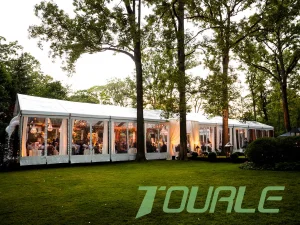
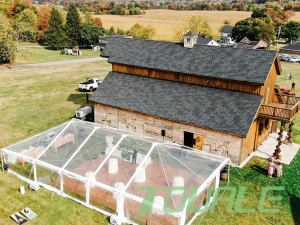
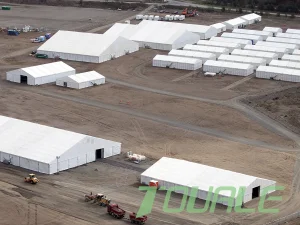
Engineered specifically for heavy wind resistance, high thermal stability, and large clear-span spatial requirements across South Africa's diverse climate zones.
South Africa represents the economic engine of the Southern African Development Community (SADC). With expanding mining operations in the Bushveld Igneous Complex, escalating demand for rapid regional logistics hubs along the Durban-Gauteng corridor, and a thriving sports and luxury events sector in Cape Town and Johannesburg, the requirement for adaptable, clear-span structural infrastructure has never been higher.
Traditional brick-and-mortar industrial facilities face prolonged municipal approval delays, soaring steel costs, and high civil engineering overheads. In contrast, Tensioned Fabric Structures (TFS)—characterized by high-strength extruded aluminum alloy frames (6061-T6) and arched roof profiles—offer South African enterprises an unbeatable structural alternative: high structural rigidity, 100% clear-span interior clearance, rapid deployment capability, and full compliance with SANS 10160 (Structural loading code for South Africa).
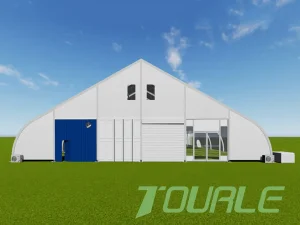
Information Gain Key Insight: Unlike standard A-frame modular tents, the high-arch aerodynamic contour of a TFS tent significantly reduces the drag coefficient ($C_d$). This makes TFS the definitive solution for high wind shear coastal zones like the Western Cape (notorious for the 100km/h+ 'Cape Doctor' south-easterly winds) and arid, dusty mining terrains in the Northern Cape and North West Provinces.
Procurement directors and project engineers across Southern Africa evaluate TFS tent manufacturers based on structural longevity, fabric UV stability under high solar irradiance, and supply chain reliability. The market is driven by four key economic sectors:
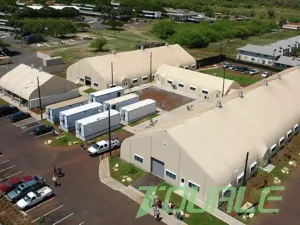
Rapid expansion in Platinum Group Metals (PGM), iron ore, and coal mining demands large-scale temporary to semi-permanent covered storage. TFS tents provide clear spans up to 60 meters without internal support columns, enabling unrestricted movement of heavy haul trucks, loaders, and conveyor equipment.
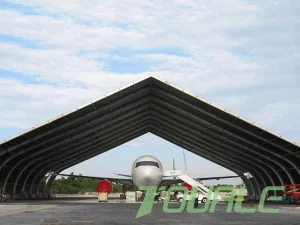
With regional air cargo expanding across Lanseria, OR Tambo, and Cape Town International airports, airlines and MRO (Maintenance, Repair, and Overhaul) firms leverage high-arch TFS tents as rapidly deployable aircraft hangars capable of sheltering narrow-body aircraft and rotary fleets.
South Africa’s agricultural export sectors in citrus, wine, and horticulture require temporary, thermal-insulated packing and staging facilities during peak harvest cycles to shield high-value produce from intense solar radiation.
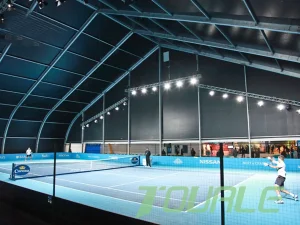
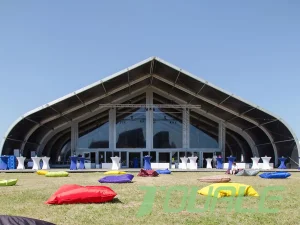
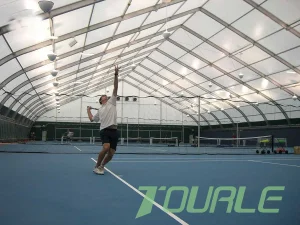
From international trade expos in Sandton to all-weather padel and tennis facilities across Gauteng, the curved aesthetic of TFS tents delivers a premium, modern architectural profile superior to conventional temporary structures.
Tourle Tent engineers TFS structures to rigorous international parameters (DIN 4102 B1, EN 13782), delivering high structural integrity under southern African weather conditions.
| Structural Component | Material Engineering Standard | Technical Parameter / Specification | South Africa Environmental Benefit |
|---|---|---|---|
| Main Frame Profile | Extruded Hard Pressed Aluminum Alloy 6061-T6 | Tensile Strength > 260 MPa; Anodized layer thickness > 15μm | 100% corrosion-proof against salt-spray marine air in Durban and Cape Town coastal zones. |
| Roof & Wall Membrane | Double-sided PVDF Coated Synthetic Fabric | 850g/m² PVC; Block-out, UV-resistant, Flame retardant (DIN 4102 B1/M2) | Resists intense solar radiation (High UV Index 11+); prevents internal thermal buildup. |
| Wind Load Capacity | Aerodynamic Arch Geometry (EN 13782) | Engineered standard: 100 km/h to 120 km/h (0.5 kN/m² to 0.75 kN/m²) | Withstands severe Cape storm gusts and highveld thunder-gales without structural failure. |
| Steel Connectors | Hot-Dipped Galvanized Steel (ISO 1461) | Zinc coating thickness > 60μm | Eliminates structural rust at critical joint intersections; extends lifespan beyond 15 years. |
| Roof Tensioning System | Internal Curved Track Tensioning Mechanism | High-tension keder insertion channels; zero fabric fluttering | Prevents fabric degradation caused by continuous wind vibration; 100% waterproof seal. |
Optional double-layer thermo-insulated roof covers create a dead-air gap, reducing HVAC energy consumption by up to 35% during extreme South African summer heatwaves.
Calculated by registered structural engineers, our high-arch TFS frameworks are mathematically modeled using Finite Element Analysis (FEA) to ensure safety under South Africa's regional wind load standards.
Modular bolt-together construction enables total relocation of a 2,000m² structure within 5-7 days, providing enterprise buyers with flexible asset valuation and site agility.
Operating from an 18,000㎡ state-of-the-art manufacturing campus in Chengdu, Sichuan Tulele Technology Co., Ltd. controls the complete supply chain—from aluminum extrusion and hardware machining to fabric tailoring and trial assembly.
In 2019, Tourle Tent established an independent, dedicated hardware manufacturing plant. This vertical integration allows us to directly control the precision tolerance of every steel connector, tension beam, baseplate, and hinge pin. By eliminating third-party component sourcing, we guarantee 100% component compatibility and offer full spare parts availability across South Africa for years to come.
Before any container leaves our factory, every customized TFS tent undergoes a mandatory full-process pre-assembly inspection. Frame fit, roof tensioning tracks, sidewall seal channels, and structural alignment are physically verified, filmed, and documented for customer peace of mind.
TFS tents require specialized anchoring methodologies based on soil conditions, local municipal building codes, and wind exposure classes in South Africa.
For temporary installations on soil, sand, or agricultural ground (e.g., wine farms in Stellenbosch or temporary mining camps), high-tensile steel stake anchors (1000mm to 1500mm length) are driven into the terrain, offering fast setup without ground destruction.
For existing logistics yards, airport tarmacs, or industrial concrete pads in Joburg industrial zones, M20/M24 chemical or mechanical expansion anchors fix baseplates directly into reinforced concrete foundations ($f_{cu} \ge 25 \text{ MPa}$).
In urban environments or historical sites where ground penetration is strictly prohibited, heavy modular concrete ballast blocks are securely tethered to structural legs to meet localized overturn resistance requirements.
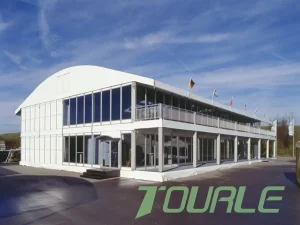
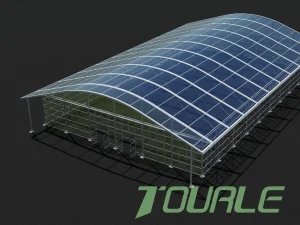
Explore our complete range of high-arch curved marquee tents, sports covers, double-decker VIP structures, and industrial storage shelters available for direct shipment to South African ports.
We manage maritime freight, custom packaging, customs documentation, and offer comprehensive remote/on-site installation assistance across Southern Africa.
We coordinate FCL (Full Container Load) shipments from Shanghai/Ningbo ports directly to Port of Durban (for Gauteng/Free State distribution) and Port of Cape Town, ensuring efficient transit times of approximately 22-28 days.
Complete export documentation package provided: Bill of Lading, Commercial Invoice, Packing List with color-coded component tagging, Certificate of Origin (COO), and structural calculations for local engineering sign-off.
Every order is dispatched with step-by-step CAD installation drawings, video tutorials, and optional dispatch of bilingual structural supervisors to lead local assembly crews anywhere in South Africa.
In-depth technical and commercial answers regarding structural design, wind rating, customs clearance, and lead times for South African enterprise projects.
Whether you require a 40m clear-span sports arena, an industrial mining warehouse, an aircraft hangar, or a high-end luxury event marquee, our senior engineering team is ready to assist with CAD layouts, structural calculations, and factory-direct pricing.