Engineered to meet high-wind load requirements across the Kenyan Rift Valley and severe tropical equator UV exposure.

Kenya has rapidly solidified its position as the primary economic hub of East and Central Africa. Driven by the expansion of the Northern Corridor transport network, aggressive industrial park investments in Naivasha, Machakos, and Mombasa, and a flourishing commercial eco-tourism sector, the demand for semi-permanent, high-volume clear-span buildings has surged exponentially. Traditional brick-and-mortar or standard steel girder construction presents significant capital expenditure (CapEx) hurdles, long municipal permitting cycles, and vulnerability to inflationary building material costs.
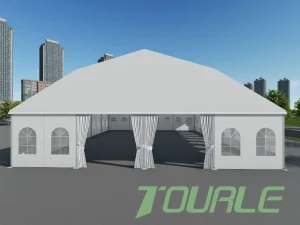
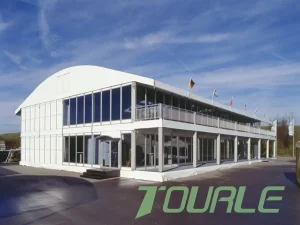
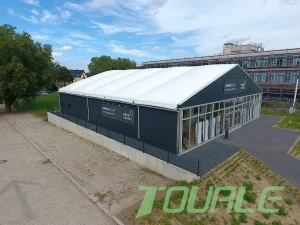
In this macro environment, Polygon Roof Tents (TFS Curved/Multi-Gabled Modular Structures) have emerged as the primary architectural choice for enterprise operations across Kenya. Designed with multi-bend aluminum alloy rafters, Polygon tents offer unprecedented internal vertical clearance and span widths ranging from 10 meters to over 60 meters without any interior supporting pillars.
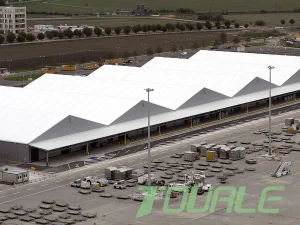
Accelerated demand for bonded warehouses in Mombasa Port hinterlands and Nairobi inland container depots (ICD) requiring rapid deployment.
Horticulture and floriculture exporters in Naivasha and Mount Kenya region require rapid shade and temporary ambient temperature control cover.
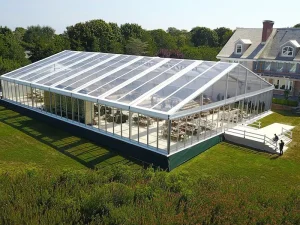
High-end event management companies and safari lodges in Maasai Mara require grand clear-span structures for multi-day conferences and galas.
In B2B procurement, the search term "cheap polygon tent" often carries a double-edged risk. Cheap can signify sub-standard structural profile thickness, repurposed low-grade aluminum alloys (such as un-tempered 6063-T5 instead of structural-grade 6061-T6), or lightweight PVC fabrics lacking adequate plasticizer content. In equatorial zones like Kenya, low-tier PVC degrades rapidly within 12 to 18 months under severe ultraviolet radiation, leading to embrittlement, roof sagging, and moisture seepage.
Conversely, strategic global exporters achieve genuine cost-efficiency through advanced automated manufacturing, mass aluminum extrusion purchasing power, and modular component standardization. Below is the structural benchmark matrix that Kenyan procurement managers must inspect prior to issuing purchase orders:
| Structural Component | Sub-Standard "Cheap" Option | Tourle Tent Factory Benchmark | Kenyan Operational Impact |
|---|---|---|---|
| Main Aluminum Profile | 6063-T5 Aluminum (Low Tensile) | Hard Pressed Extruded 6061-T6 Aluminum | Resists high wind loads up to 120 km/h in open Rift Valley areas without frame flex. |
| Roof Fabric Weight | 650g/sqm Low-Density PVC | 850g/sqm Double PVC-Coated Polyester | 100% Waterproof, UV-Stabilized, Flame Retardant (DIN 4102 B1, M2). 10+ Year Lifespan. |
| Steel Connectors | Standard Cold-Galvanized Steel | Hot-Dip Galvanized Steel (Above 60μm) | Prevents coastal corrosion in salty environments such as Mombasa and Malindi. |
| Wind Resistance | Up to 60-80 km/h (Risk of Collapse) | Calculated Wind Load: 100-120 km/h | Ensures structural stability during seasonal tropical storms and unexpected squalls. |
The unique polygonal architecture featuring a high arch-roofline provides increased overhead capacity, optimizing thermal insulation air buffers and payload space. This geometry serves various key sectors in Kenya:
In logistics centers like Syokimau, Athi River, and Eldoret, rapidly erected shelter space is critical to managing overflow freight. Polygon tents allow forklifts and high-reach stackers to maneuver uninhibited thanks to side eave heights ranging from 4 to 8 meters and center ridge heights reaching over 12 meters. Integrated insulated sandwich panel sidewalls or rolling shutter doors transform these structures into secure, long-term warehousing facilities.
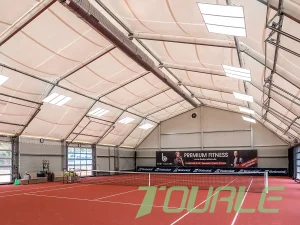
With Kenya's expanding focus on sports infrastructure, schools, private clubs, and municipal centers in Nairobi require covered courts for tennis, basketball, indoor football, and swimming pools. Polygon tent covers block harsh equatorial heat while translucent PVC roof options allow maximum daylight harvesting, drastically reducing operational electrical power costs.
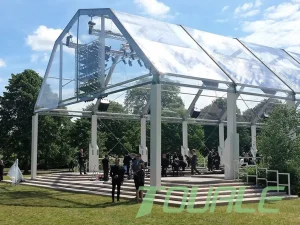
Exhibition organizers hosting international trade expos at the Kenyatta International Convention Centre (KICC) grounds or Nairobi National Park peripheries rely on polygon marquee tents for premium VIP aesthetics. The polygonal geometric lines deliver a striking, modern appearance that elevates brand positioning far above standard A-frame marquees.
Direct international procurement requires a streamlined supply chain route from factory floor to job site installation. Tourle Tent (Sichuan Tulele Technology Co., Ltd.) provides turnkey support designed to navigate East African import regulations effortlessly:
Explore our full catalogue of high-capacity event, warehouse, and multi-purpose modular structures.
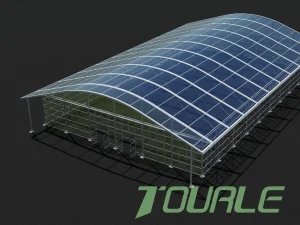
As corporate environmental, social, and governance (ESG) compliance becomes central to capital project evaluation in Kenya, temporary and semi-permanent architecture must evolve. Tourle Tent is actively engineering advanced structural technologies that integrate directly into polygon tent platforms:
Integrating flexible thin-film photovoltaic (PV) modules onto outer PVC roof membranes, converting large warehouse roof areas into off-grid clean solar energy producers.
Embedded real-time tensioning sensors that monitor frame stress during high-wind events in open terrain, alerting site administrators via mobile apps.
Closed-loop aluminum structural components paired with eco-friendly recyclable PVC polymers that minimize long-term environmental footprint.
Direct technical answers addressing structural safety, customs, installation, and long-term performance.
Consult directly with our structural engineering team to receive customized CAD layout drawings, load calculations, and a direct factory quotation delivered within 24 hours.
Send Inquiry Now